

Four stories that matter this week:
1/ On October 5, France and Germany asked Brussels to build “an EU rapid-response trade weapon”. President Emmanuel Macron and Chancellor Friedrich Merz warned that “systemic market-distorting practices” are putting Europe’s industrial base at risk, 10 days before EU leaders meet in Brussels to discuss Chinese trade imbalances.
For context, the EU’s current trade deficit with China has reached about €1 billion ($1.18 billion) a day in September 2026. In 2025, the EU still ran a €128 billion goods surplus overall, and its surplus with non-Chinese partners was roughly €488 billion. China is very much the outlier that needs to be “tackled”.
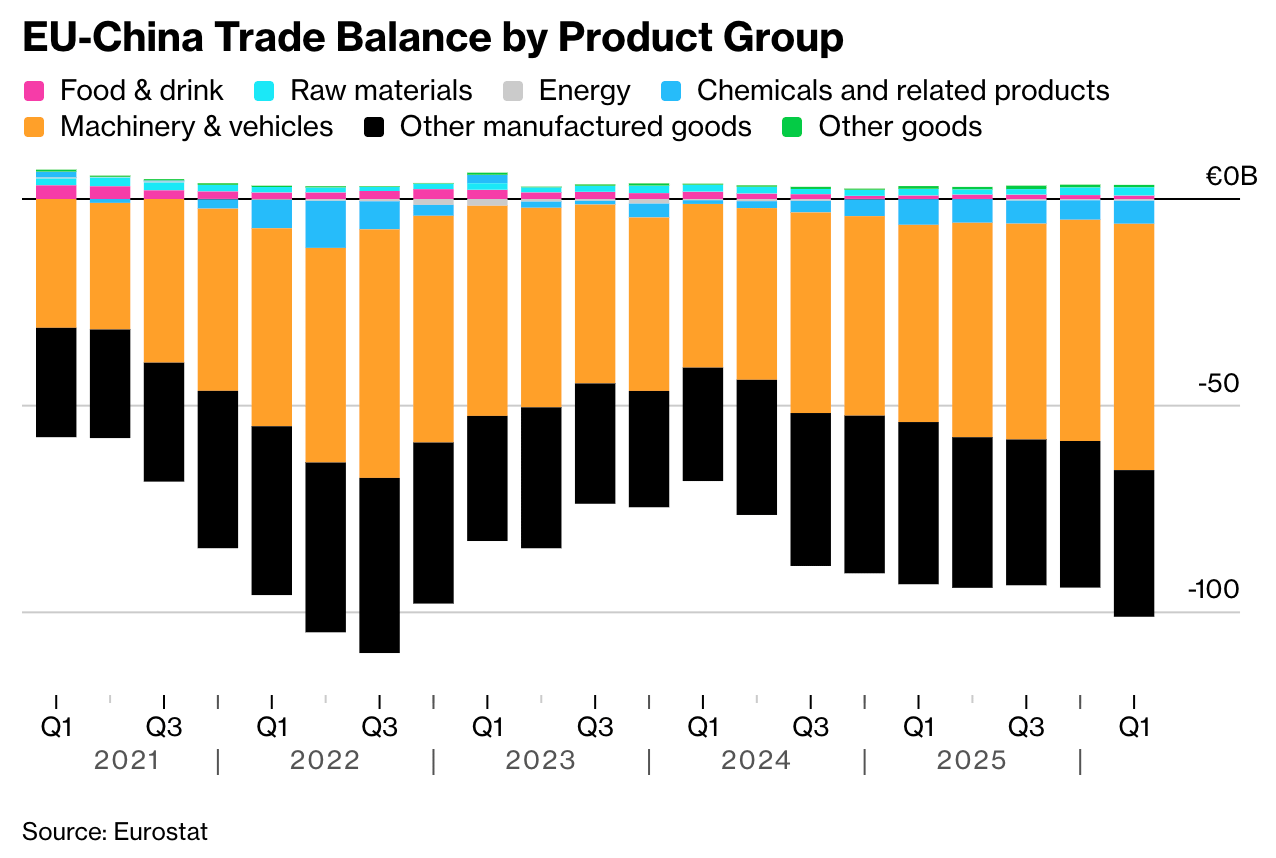
German officials arguing that Europe needs something comparable in force to the US’ Section 301 tariffs or China’s restrictions on critical-mineral exports. Chemicals, PET and hybrid vehicles are already singled out as sectors requiring urgent attention.
Paris and Berlin also want 2 new instruments: 1) rules limiting companies’ dependence on a single source for critical supplies, and 2) restrictions on EU market access for countries that undermine fair market conditions. The legislation itself would still require approval from EU governments and Parliament.
As a matter of fact, France has been talking since 2022-2023 about the need to “put an end to the naivete on trade”. Four years later, Europe is still trying to figure out how exactly to stop being naive, whatever that rhetoric actually means in practice.

2/ Manufacturing is doing well despite the Iran-driven energy shock. The Eurozone Manufacturing PMI rose from 52.7 in August to 52.9 in September, its strongest reading since May 2022, with the Netherlands leading growth and Germany also expanding solidly.
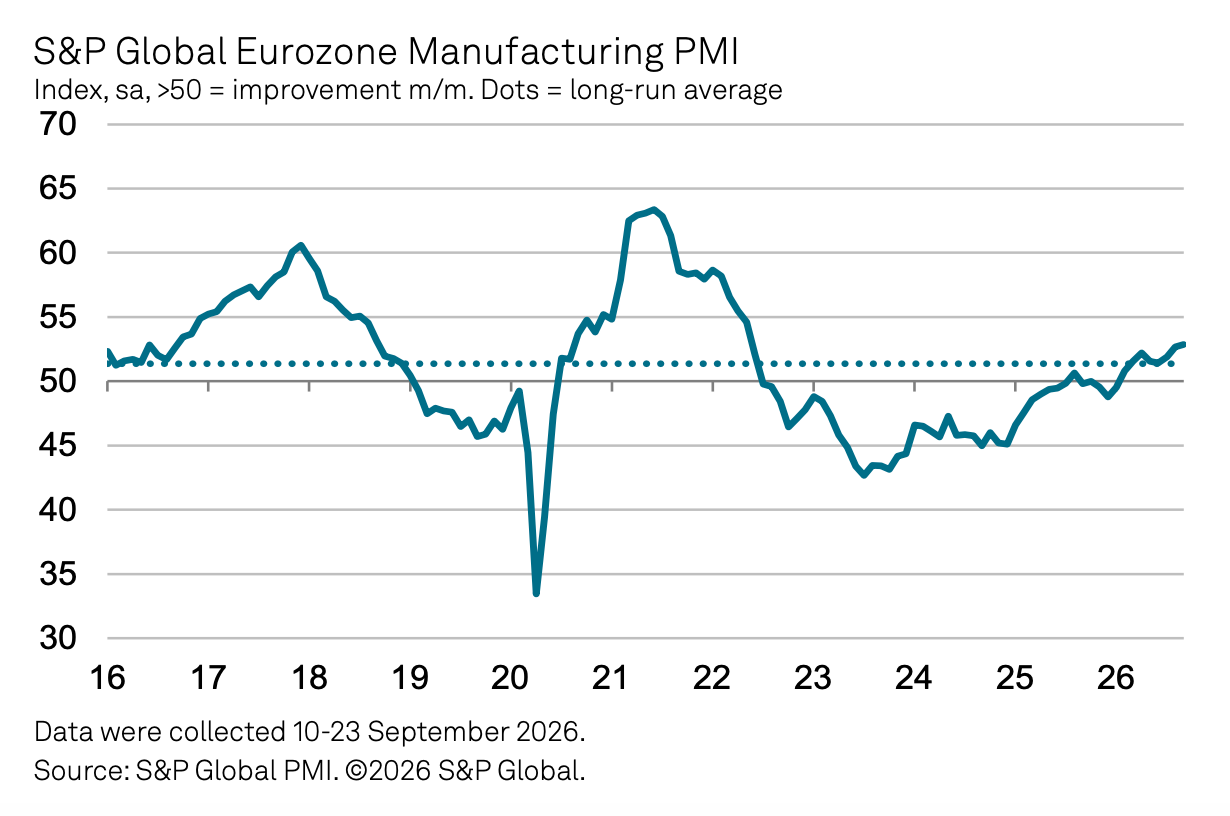
The catch is where the demand is coming from. According to Oxford Economics, strength is concentrated in capital goods, particularly AI and defence equipment, while consumer-goods demand is weakening under price pressure.
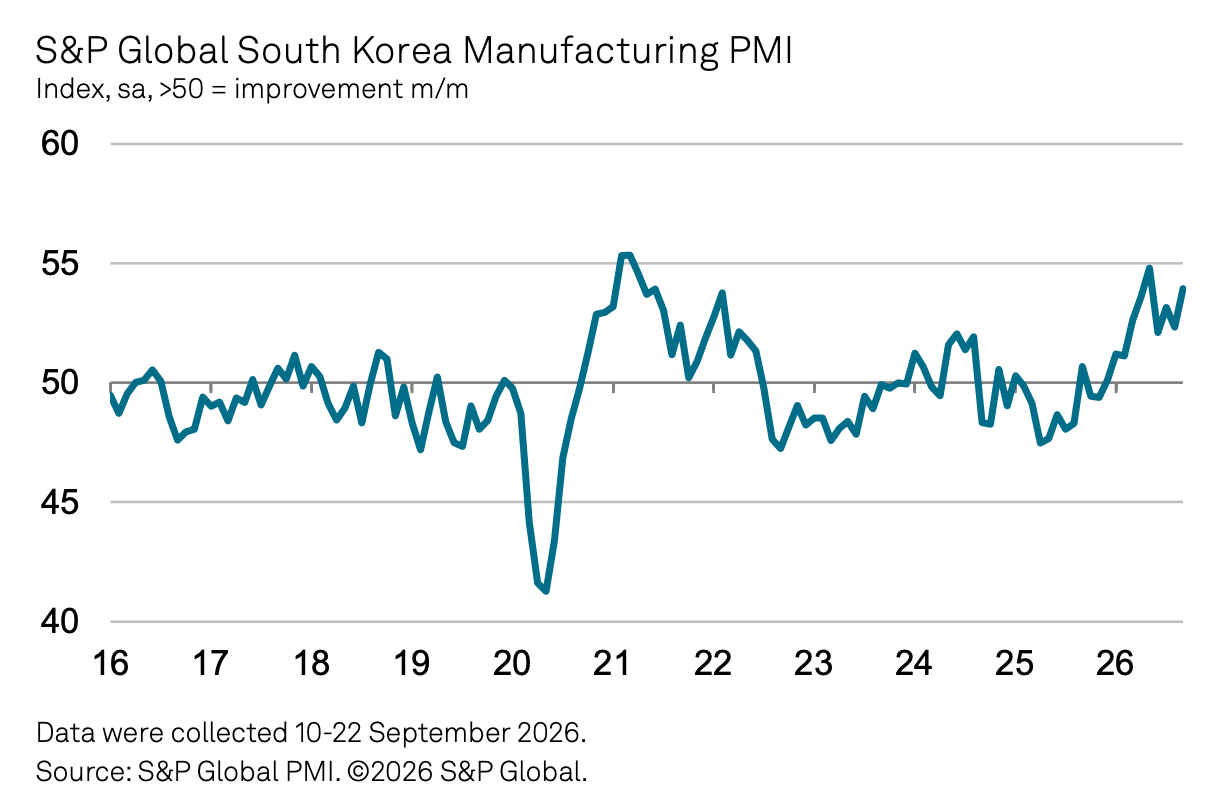
Asia shows the same split. Taiwan’s PMI jumped from 54.7 to 56.7, while South Korea recorded its strongest factory growth in 4 months and its fastest export-order growth in 15½ years, helped by semiconductors and automotive demand. India expanded at its fastest pace in 7 months; China, Vietnam and Indonesia also grew.
Overall, global manufacturing is expanding again. But a disproportionate share of that recovery is being pulled by AI infrastructure, semiconductors, defence and other capex-heavy industries, all while other manufacturers are dealing with higher energy costs, inflation and rising interest rates.
3/ President Trump could be heading to Manila next month. Sources say a 2-day visit in mid-November is being prepared around the 49th ASEAN Summit, which runs from November 16–18, although neither the White House nor the Philippine government has officially confirmed his attendance.
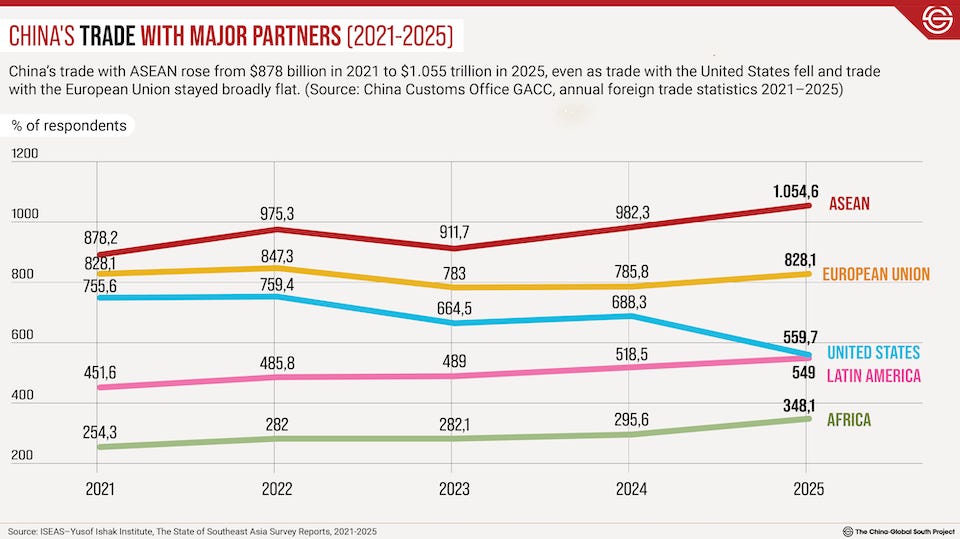
If Trump attends, the timing can be interesting. China remains ASEAN’s largest trading partner for 17 consecutive years, Chinese industrial and technology links across the region are deepening, and South East Asian governments have become very good at working with both sides. Showing up to the party is one thing; competing economically is another.
4/ Still in South East Asia, Vietnam’s economy averaged roughly 9% growth during the first 3 quarters of 2026, yet the government is still pursuing its full-year 10% target. To get there, Q4 GDP would need to grow by at least 12.5%.
For context, Vietnam has reached that kind of quarterly growth only once recently: 13.7% in Q3 2022. Since then, growth has averaged closer to 7%.
How will Vietnam get there? Foreign-investment commitments between January and September rose 76% year-on-year, while disbursed FDI increased 12%. Industrial strength helped exports jump 39% in September, while domestic retail sales grew 14%, supported by hotels, restaurants and tourism, according to Bloomberg Vietnam.
The other side of the equation is inflation. It reached roughly 5.1% last month, above the government’s 4.5% target, as stronger consumption, investment and public spending collide with tight supply in construction, energy and transport.
Prime Minister Lê Minh Hưng acknowledged that double-digit growth creates “significant pressure” and “major challenges”, but the target remains, as the country is effectively trying to do 3 things at once: expand manufacturing capacity, accelerate infrastructure construction and keep inflation under control.
More factories also require more electricity, roads, ports, warehouses, engineers, and financing. If you are in the space of building industrial capabilities across Asia, connect with us on WhatsApp http://wa.me/6591098289 to compare notes.
Enjoy the rest of your week, stay sharp, and keep building.
Anh
On behalf of the Tocco team
Further Readings · Supply Chain & Manufacturing News · 10.2026
(Finland 🇫🇮) Finnish developer Enetron Park announced a 250 MW data centre project in Pyhäjoki, with construction planned for early 2028 - except the municipality’s own meeting minutes show the zoning initiative was rejected. Pyhäjoki (in the north of Finland) is nevertheless becoming a data-centre cluster: Damac’s Hyperco is also planning capacity there, while Finnish cloud company Verda began zoning another facility in September.
(Global 🌍) The Iran-driven disruption around the Strait of Hormuz and attacks on Russian refineries are pushing diesel prices directly into the food supply chain. Australian farmers’ fuel costs have risen more than 50%, diesel prices in Brazil are up 40%, and UK-based Elveden Farms expects its annual fuel bill to rise 40% to £560,000. The UN Food Price Index reached its highest level since 2022 in September, while Copa-Cogeca, representing 22 million EU farmers, warns that higher diesel and fertiliser costs could materially reduce food production.
(US 🇺🇸 / South Korea 🇰🇷) Apple is expanding further into smart-home hardware through an unusual partnership with LG Electronics, covering doorbells, thermostats, smart locks and indoor/outdoor security cameras. The products will work with Apple’s upcoming home-control hub but carry the LG brand, with LG handling manufacturing and product support. For Apple, it is a relatively asset-light way to widen its hardware ecosystem: control the interface and ecosystem, while letting an established electronics manufacturer handle the physical supply chain.