



Four stories that matter this week:
On August 3, a coalition of 25 U.S. states sued the Trump administration in the Court of International Trade to block new Section 301 tariffs of 10% to 12.5% imposed on 60 economies. These states argue the duties exceed presidential authority and will raise costs for consumers and businesses. The tariffs took effect on July 24 and cover economies representing about 99.4% of U.S. imports.
According to United States Trade Representative, the new tariffs was to pressure foreign economies to block imports made with forced labor and to enforce U.S. trade rules under Section 301. Yet, critics argue these new duties are a way to preserve Trump’s earlier tariff structure in a different legal form.In China, netizens call Donald Trump “Chuān Jiànguó” (川建国 ), which means '“Build-the-Nation Chuan”. Which nation is “Chuan” actually building? To Chinese netizens, he is working to strengthen China. Thanks to the challenges, many new trade routes and innovations are being developed.
This week’s example: ASML’s sales in China have been constrained since 2019 by U.S.-led export controls that the Dutch government has largely aligned with. Essentially, ASML cannot sell EUV (extreme ultraviolet) machines to China at all, and some of its most advanced DUV (deep ultraviolet) tools also require licenses or are blocked for certain Chinese customers. This opened new innovation routes for domestic makers in China.
On July 28, Reuters reported that a Shanghai state-backed company (Shanghai Aishengna Electronic Technology Group) had begun limited production of domestically developed immersion DUV lithography tools, with plans to deliver about five units this year, and around 20 in 2027 to Chinese chipmakers including SMIC and CXMT.
This development is important as DUV tools have long been dominated by the Netherlands’s ASML. ASML’s shares fell sharply after the news broke, wiping out $60 billion of its market value.Still on protectionism, on July 28, the U.S. FCC banned the import and sales of new Chinese humanoid robots, effectively locking out Chinese leaders like Unitree (who currently controls over 25% of the global humanoid market).
We discuss this and what it means for China’s lead position in this market in our piece “The US Ban on Chinese Humanoid Robots: What does it mean for non-US Buyers?” as, once again, new trade routes open when one closes.
Looking for reliable global industrial components and materials?
Tocco team provides full support for sourcing.On a closing note, the AI boom is on track to be the most resource-intensive buildout in human history. 61% of all global venture capital ($258.7 billion) was absorbed by AI firms in 2025. Likewise, 44% of total global greenfield FDI was funneled directly into physical infrastructure, data centers, semiconductors, and energy, nearly 3x the share from 5 years ago. The IEA projects that global data center electricity consumption will be 2x to 945 TWh by 2030, with the U.S. and China driving 80% of that growth. We dived into this in our piece “The New AI Physical Economy - A 2026 - 2030 Outlook” for a complete breakdown of 3 mega-trends that industries must look out for.
Enjoy your week. Stay sharp, and keep building.
Anh & Tri
On behalf of the Tocco team
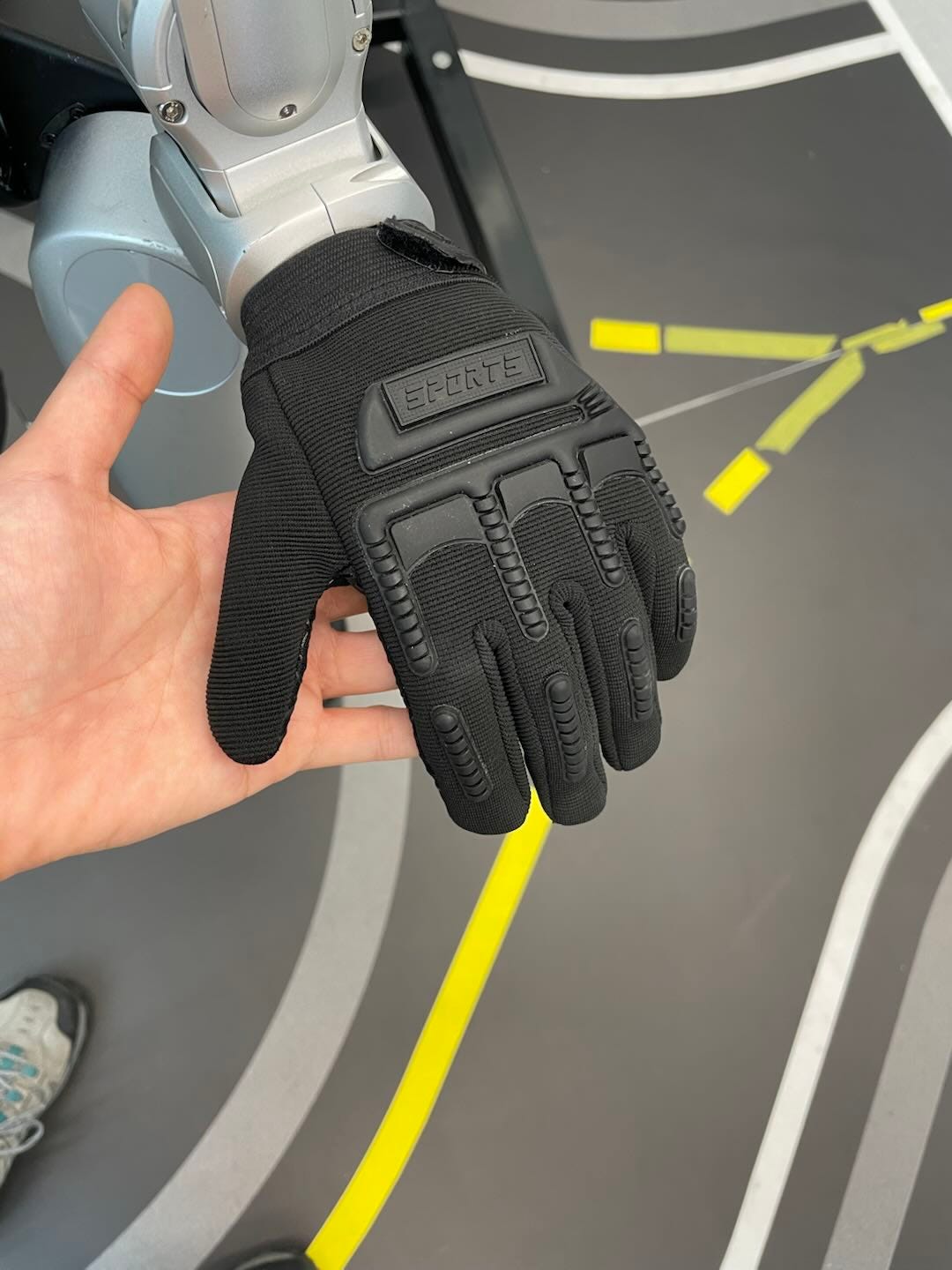
Photo of the Week
Further Readings · Material & Manufacturing News · 08.2026
(Hong Kong 🇭🇰 / United States 🇺🇸) Shein has disclosed an ongoing FTC investigation that threatens its upcoming Hong Kong IPO. The consumer protection probe, revealed in Shein’s draft prospectus, reportedly targets the company’s reliance on design tricks like “fake countdown timers” and “gamified discounts to drive sales”. The regulatory pressure lands as Shein’s financials take a massive hit: the company posted a $99 million Q1 2026 loss. With its valuation already slashed from $100 billion to $40–50 billion and concurrent EU probes underway, Shein’s path to the public markets looks increasingly difficult.
(United States 🇺🇸) Microchip Technology is acquiring Israeli edge-AI chipmaker Hailo to strengthen its portfolio in power-efficient AI processing for robotics, advanced vision, and embedded edge applications. While financial terms remain undisclosed, reports indicate this is a fire sale for Hailo, which had previously raised around $340-$350 million and reached a $1.2 billion valuation as recently as April 2024. The deal provides Microchip with critical NPU capabilities and an established ecosystem to compete in edge computing.
(Global 🌍) Bio-based PET is now growing 3x faster than the conventional fossil-PET market, on track to reach to $7.9 billion by 2032. Driven by corporate decarbonization targets and strict incoming EU mandates, procurement teams are moving to bio-resins. Bio-based PET is a “drop-in” polymer, slotting into existing PET recycling infrastructure without extra financial investments. While fully 100% bio-PET remains a capital-intensive scaling challenge, the 30% bio-resin is already materially reshaping packaging economics.
(Global 🌍) Carbon nanomaterials have moved to being industrial scale, with the global market projected to surge from $7.81 billion in 2025 to $80.66 billion by 2035 at a 26.3% CAGR. Growing at 4x the rate of the broader advanced materials sector, global CNT production surpassed 11,400 tonnes in 2025, driven heavily by EV batteries where CNT additives reduce electrode resistance by 15% to 25%.