

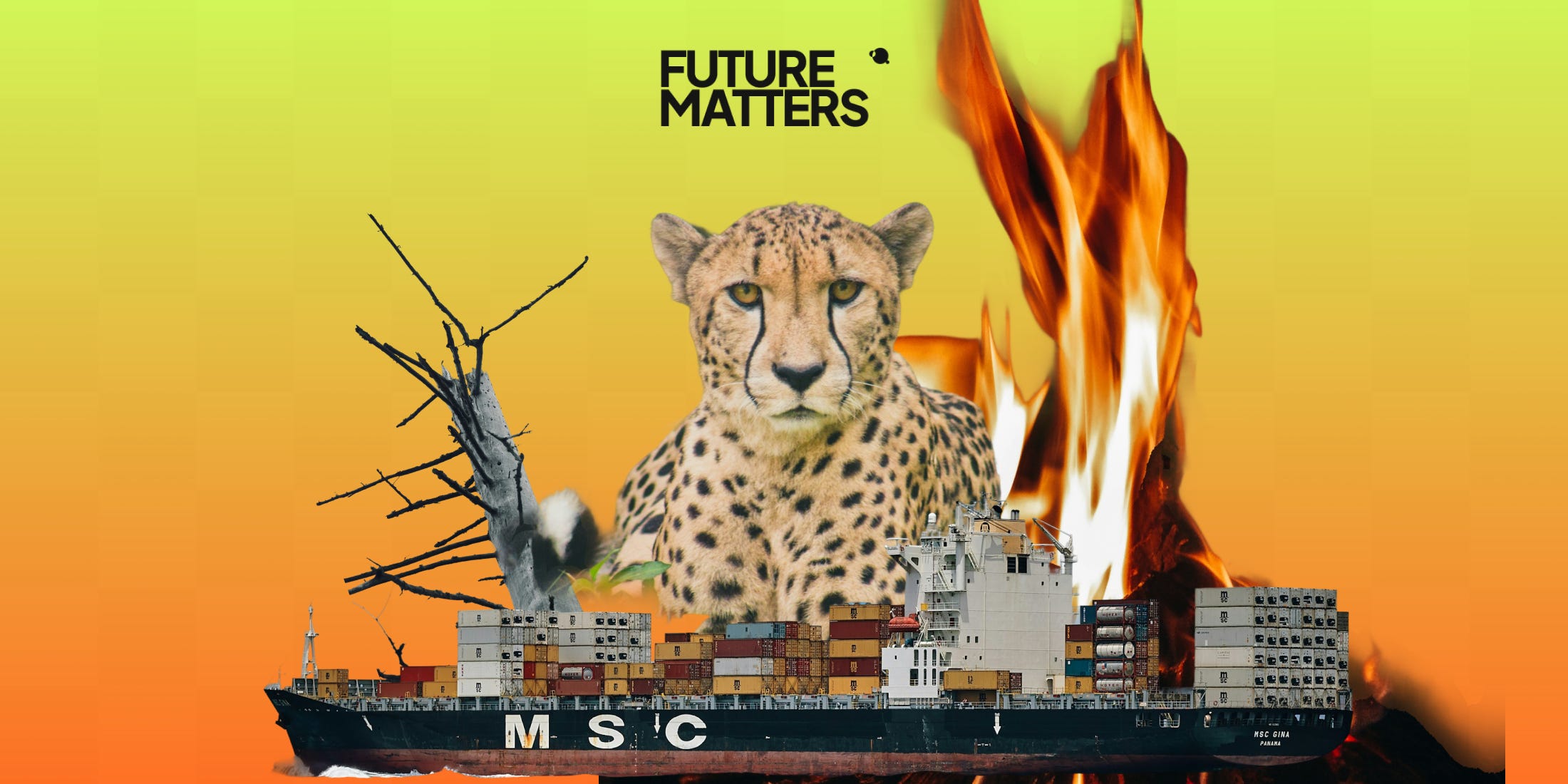
Six days ago, the world looked a little different. And this is today’s world:
1. The Strait of Hormuz - through which roughly a fifth of the world’s oil and LNG passes - is currently closed to shipping following the escalation of war in Iran.
Around 750 ships are caught in the backlog. Of these, only about 100 are container ships - yet these 100 ships, 100 “Magamaxes” - represent 10% of the world’s total container capacity. Which really makes us ask ourselves: How come 100 ships represents 10% of TEU capacity? Is the world that...small?
Turns out it is small: according to Alphaliner, there are ~7,498 operational container ships, totalling 33.69 million TEU capacity. MSC alone operates nearly 1,000 vessels (with 7.2 million TEU or ~21% global share).
The “global” maritime logistics chain, turns out, to be not a web of millions; it’s a high-stakes relay race run by a very small number of massive players (Top 10 carriers control 84.1% of capacity (28.35 million TEU).
The next few months of this very fragile global supply chain are going to be very hard to predict. Our team at Tocco.AI are actively tracking these logistics and supply chain conflicts and chokepoints here.
2. War or not - the EU has its own internal turbulence to solve.
The Financial Times put it bluntly this week: the EU’s climate simplification drive is punishing the companies that moved first and rewarding those that waited.
Sustainability advocates are not happy either: the list of regulations being walked back or softened keeps growing - CSRD and CSDDD, EUDR, the 2035 combustion engine ban, and now the ETS is under pressure too.
One senior EU official argues the blame for green policy is misplaced - the real problem is “a deep lack of structural reform across member states“. And that’s not easy across 27 countries.
Perhaps we could deploy here the words of the late Prime Minister Lee Kuan Yew, who said back in 2011: “A one-tier Europe with different spending habits, thrift habits and discipline is too difficult to achieve.“
3. Still, efforts to unify are made by the EU.
The same week, the EU published the Industrial Accelerator Act, the centrepiece of its Green Industrial Deal. Three things it aims to do:
first, it creates “lead markets” for low-carbon industrial products like cement, steel, and aluminium, letting public procurement favour “Made in EU” based on emission and origin criteria - leveraging the fact that 15% of EU GDP flows through public procurement.
second, foreign investments above €100 million in strategic sectors like batteries, EVs, and solar will face conditions on local employment and content.
third, it streamlines permitting for manufacturing and decarbonisation projects to cut delays.
Whether the cup is half full or half empty is your perspective. But the pattern we’ve observed over ten years is this: whenever such a proposal comes out in the EU, it gets praised in the first wave. Complications come in the second. It will take 5 to 10 years to see the real implications on business, longer than the mandate of anyone who voted for it.
4. In Asia, polyester prices are climbing, supported by elevated crude prices - made worse by the Middle East escalation and the Strait of Hormuz disruption.
What this means for buyers: rising input costs aren’t going away while crude stays volatile; heavy reliance on a single sourcing region is a growing risk; and recycled feedstocks - post-industrial and post-consumer waste from hubs like Vietnam - could offer better cost predictability.
5. Speaking of stuff-made-from-oil - just out this week: our report on Advanced Composites and Bio-Composites.
Our team’s overview of the composites industry, covering the shift from thermosets to thermoplastics, the rise of bio-based fibres and resins, recycling technologies like pyrolysis and vitrimers, and the regulatory forces across sectors. Check this report out if this is your space, or simply for your curiosity.
Enjoy your weekend. Stay sharp - and keep building.
Anh
On behalf of the Tocco team
Further Readings · Industrial Intelligence · 03.2026
(Germany 🇩🇪) Nuclear fusion startup Proxima Fusion is seeking around €2 billion to build a test facility in Germany
The Bavarian government has already committed €400 million, and Proxima itself will contribute another €400 million, with the remainder expected from the federal government.
(Europe 🇪🇺) How Solarix Creates Energy From Colourful Building Facades
Solarix’s founder on how inorganic colour glazes, recycled aluminium mounting systems, and 30+ year facade durability are turning building skins into energy-generating architectural materials.
(Global 🌊) Ocean Sewage Alliance: From Closed Beaches to Sewage Crises
Today’s edition of things we don’t talk about enough: how is sewage bad for the ocean? The Ocean Sewage Alliance breaks down the crisis, the costs, and the solutions, changing the tide.