


Moon Landing this and Moon Landing that.
If it were 5 years ago, we collectively could have paid more attention to this.
But as the Gen Z told us to “read the room”, one simply has very little attention left for this great Moon endeavour, while a lot else is at stake on Earth.
In our own world of materials, manufacturing and procurement, the stakes include unstable tariffs, supply chain chokepoints (such as the Hormuz shutdown), changing regulations, loss of manufacturing competitive edge in Europe or the U.S., to name a few.
Among all of these angles, procurement and sourcing are definitely at the frontline. And this week, we want to focus on packaging sourcing in China and Vietnam.
Now, not everyone sourcing today is buying from China and Vietnam. But it would also be quite dishonest to pretend those two countries do not still sit at the centre of an enormous share of global sourcing decisions, directly or indirectly.
Here are 3 important datapoints for you:
Sourcing in China & Vietnam since Trump Term 2
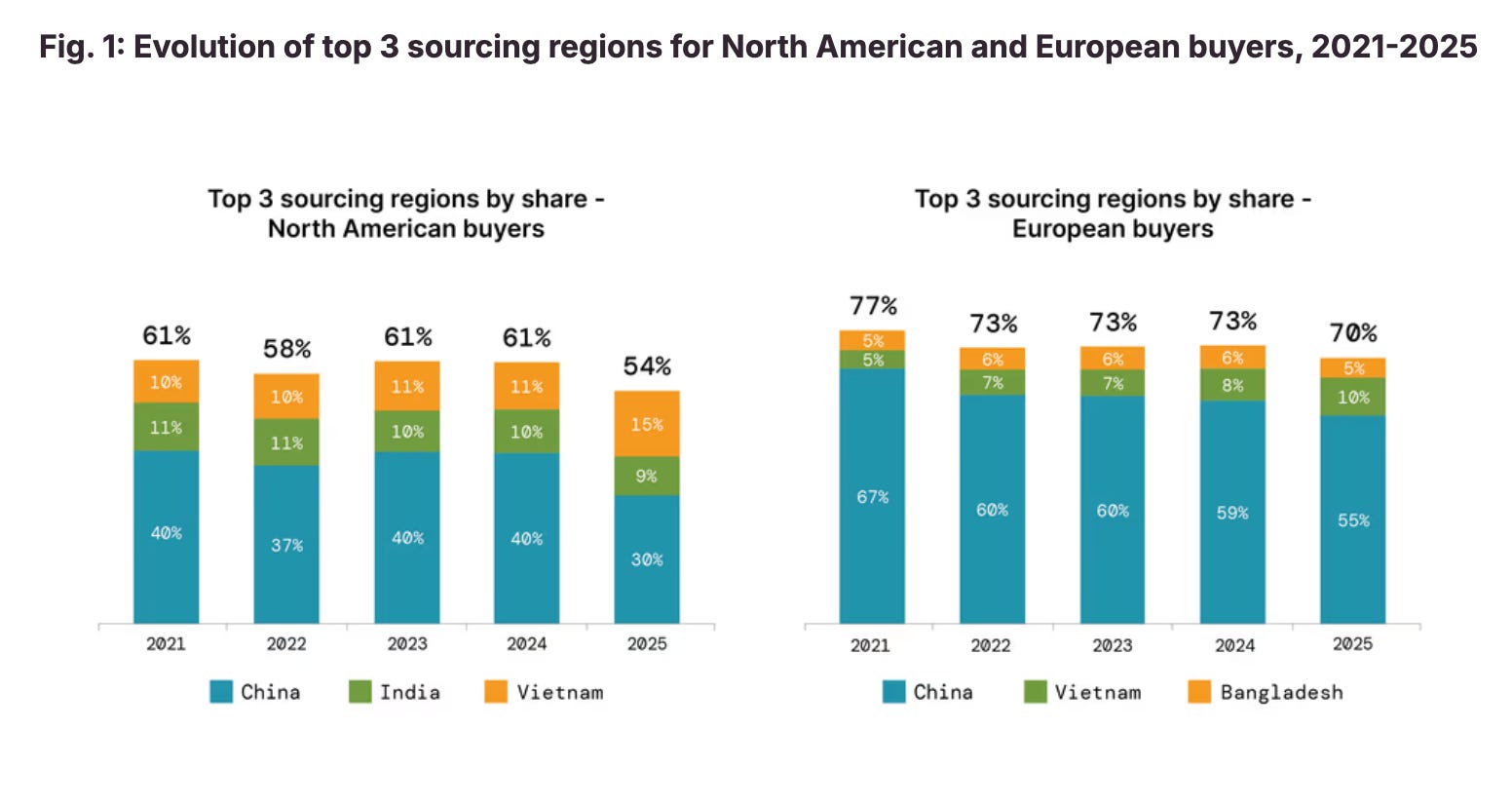
1. China dominates global sourcing 2020-2024
North American and European buyers still source the overwhelming majority of their goods from a handful of countries - namely China, Vietnam, India, and Bangladesh. Among these, China is the backbone of global supply chains for physical goods.
2. Tariffs changed the math in 2025
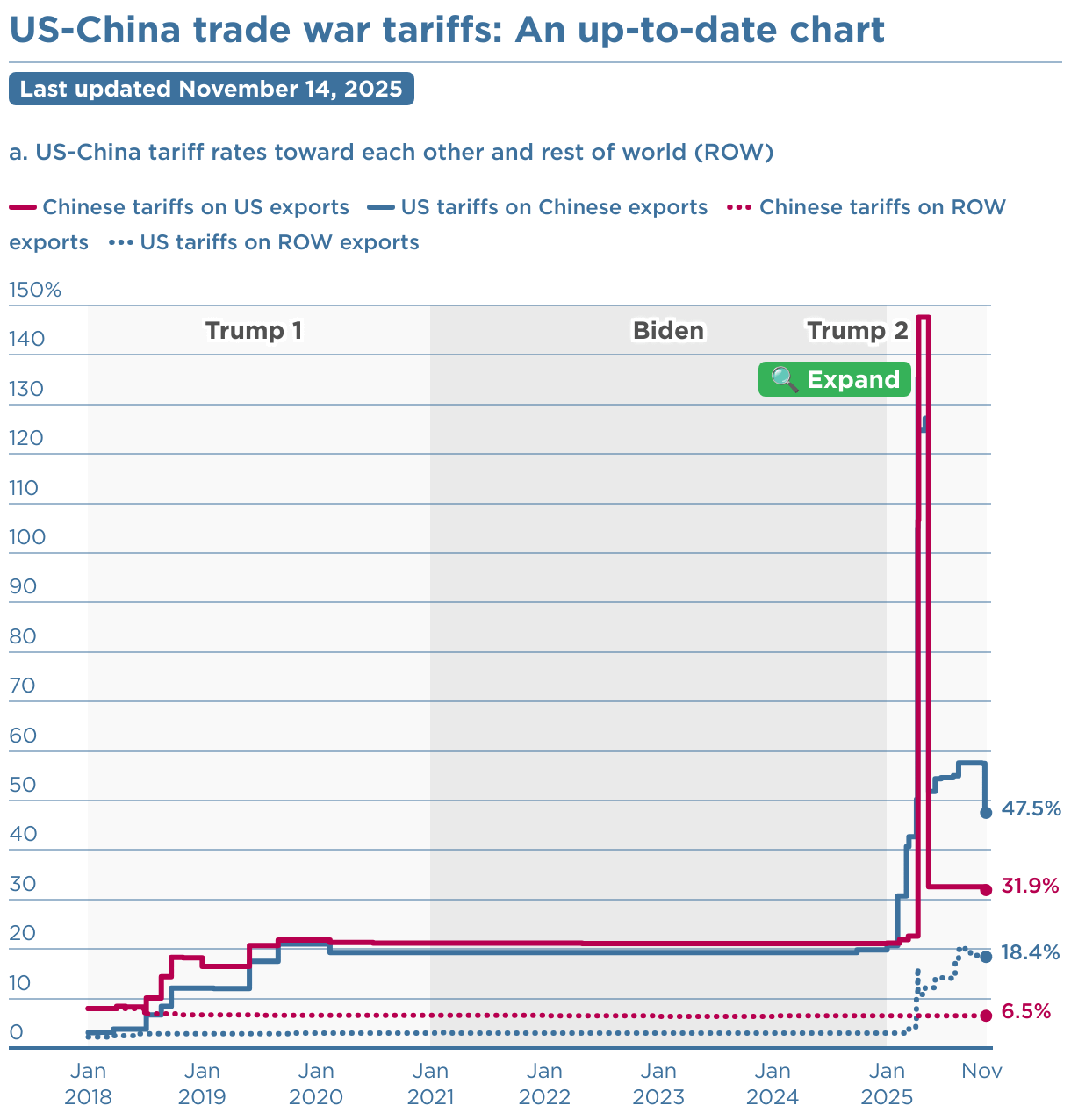
Then came the tariff escalation. What started under Trump Term 1 crept up gradually - but Trump Term 2 sent rates spiking to levels that made business-as-usual untenable. US tariffs on Chinese exports hit 47.5%. China retaliated at 31.9%. The cost of doing business through traditional channels changed dramatically and fast.
3. Diversification from China that isn’t really diversification in 2025-2026
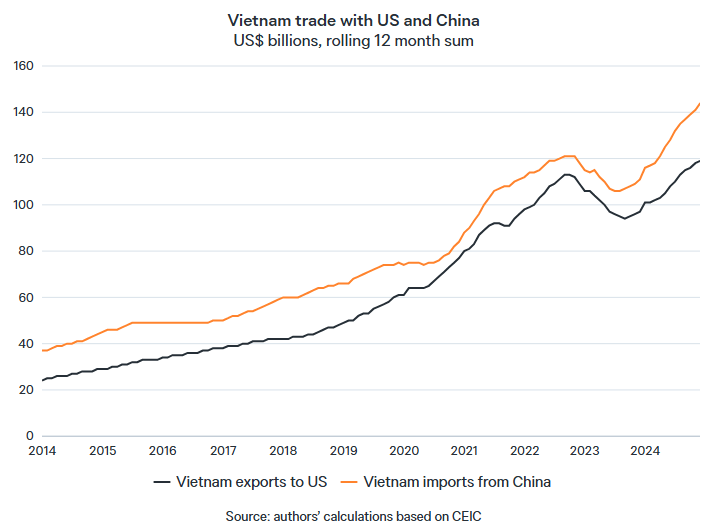
Buyers responded by shifting volumes - primarily toward Vietnam. On paper, China's share fell. But look more closely: Vietnam's imports from China have nearly tripled since 2017, and a growing share of those imports is Chinese value-added being re-exported to the U.S (and to some extent, Europe). The supply chain moved, but the dependency didn't.
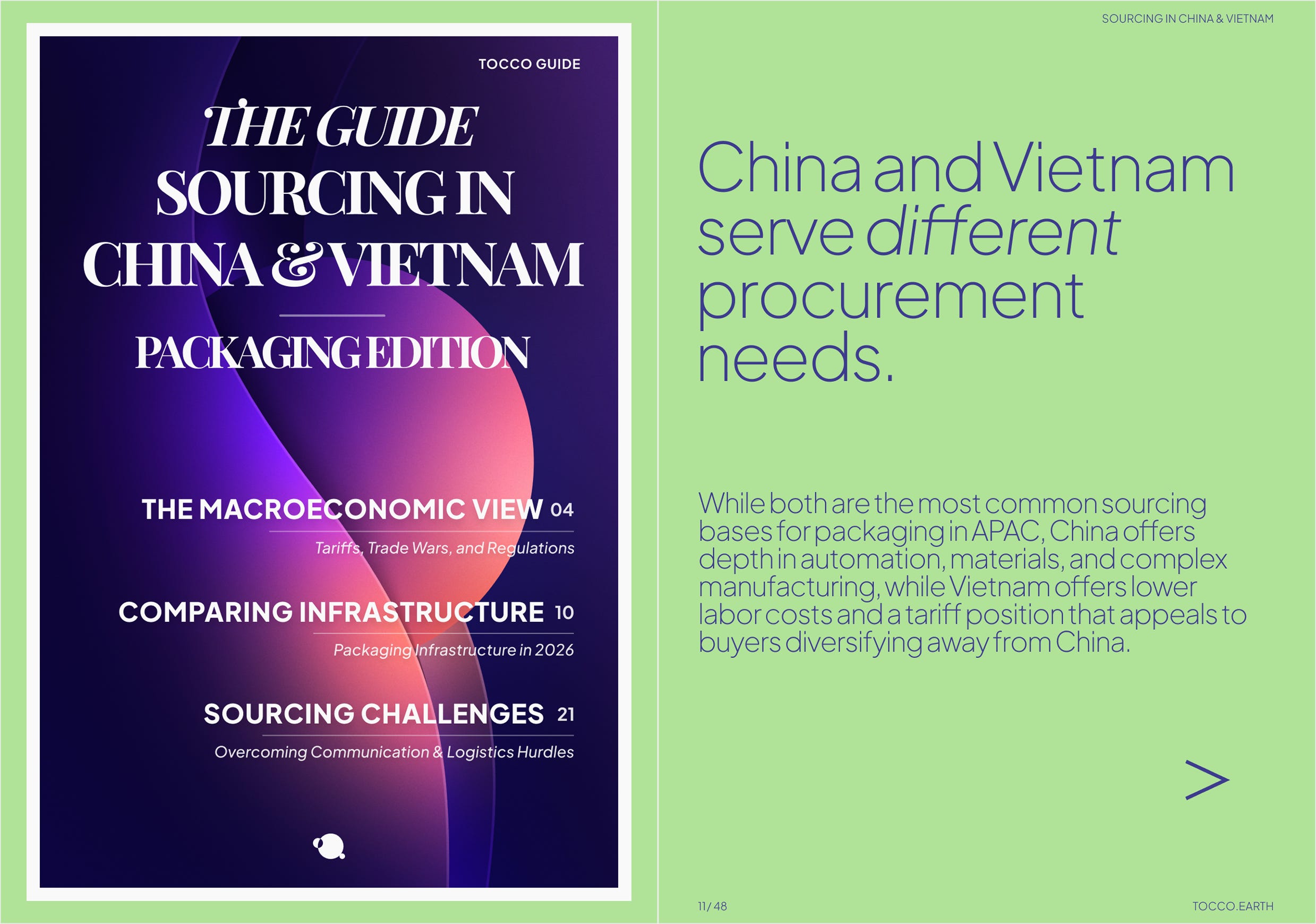
To some analysts, this sourcing story is fascinating from a purely intellectual point of view. But we, people on the ground, know the enormous hassles and challenges of navigating this. Our team has pulled together a quick Guide to Sourcing in China & Vietnam 2026 - Packaging Edition, and we’d love to give it for free for the next 72 hours to those who actually need to navigate this environment.
Download: Guide to Packaging Sourcing in China & Vietnam 2026
The guide is designed for packaging procurement teams in particular, but the broader logic applies much more widely. You’ll see:
China remains the deepest and most diversified manufacturing base for packaging globally. This is where the compounding effect happens: automation, tooling speed, component density, and access to materials.
Vietnam, by contrast, has become increasingly attractive in labour-intensive packaging categories and certain paper-based formats, helped by materially lower labour costs.
But (there is always a “but”) - Vietnam is not a frictionless replacement for China. In most cases, it is better understood as part of a complicated China+1 reality - where skills gap and the lack of a full supply chain will affect lead time and eat up margins. Download the Guide for full analysis.
Free for the next 72 hours. After that, the guide returns to its full-access status.
A Step Further ⋅ Private Executive Immersion into China’s Industrial Frontiers
A report can give you a map. It cannot replace being in the room.
If this topic is close to your work, and if China is part of your strategic horizon, the natural next step is FutureMade China - a private, curated, executive immersion for those who want to see the terrain directly.
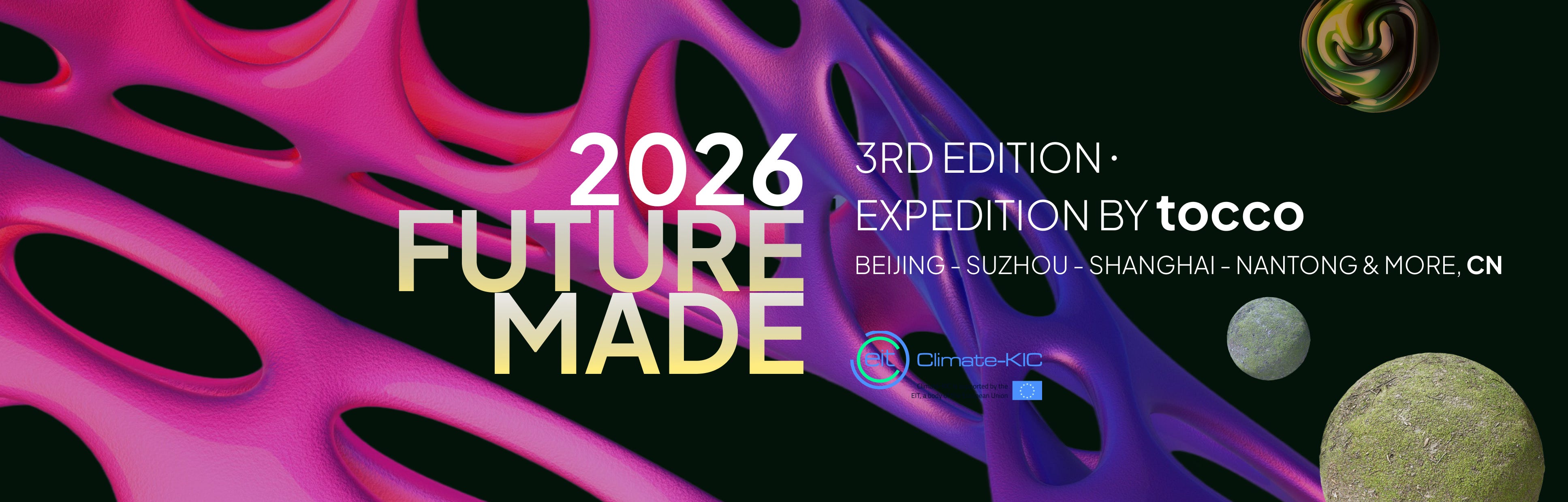
The current concept for the next cohort is a 5-day route through Beijing, Suzhou, Shanghai, Nantong and beyond, designed for founders, investors, and senior operators seeking direct access to China’s industrial frontier across advanced manufacturing, robotics, AI, biomanufacturing, industrial policy, and the systems shaping what comes next.
For those making meaningful sourcing, manufacturing, investment, or market-entry decisions, the more valuable move is often to see the landscape first-hand, with context and access that are difficult to assemble alone. Applications are now open for the June and October 2026 cohorts.
FutureMade is not a tour. It is a private executive immersion into China’s industrial frontier. Each cohort is intentionally kept very small to preserve the quality of access, conversation, and fit.
Even More Resources for You
(Global 🌏) It’s an understatement to say that Packaging Regulations are complicated. It is nightmarish. Download The Global Packaging Compliance Handbook for 2026 - we talk about packaging regulations across 5 regions and 120+ distinct legislative updates (took us a while to do this, as you can imagine).
(China 🇨🇳) To understand the 5 major industrial hubs of China and how this density drives the speed up and the cost down, download available on China Manufacturing in 2026, prepared by our team in China.
(Vietnam 🇻🇳) Arguably one of the “hottest” places right now in terms of economic growth, our team in Vietnam created a map of two manufacturing corridors in Vietnam for those who are curious about what they can do here in the next 5 to 10 years.
(China 🇨🇳) China’s New Five-Year Plan, according to Leon, Tocco’s Founder, is probably the most important industrial document of 2026. Not reading it when you want to work with the ecosystems, is a grave mistake. You can read his analysis here.
(Vietnam 🇻🇳 and Global 🌏) For those who love Podcasts, Leon sat down with Tu Minh Tri, a Cambridge political scientist from Vietnam, to discuss the collapsing global order, Vietnam’s rise, and more. Available on Youtube, Spotify and Apple Podcast.
(China 🇨🇳 and Global 🌏) Still a Podcast, Leon this time chatted with Sven Agten, a Belgian CEO who has spent 20 Years Inside China. They discussed China’s development, Europe’s recent economic decline, and the future of the global economy. Available on Youtube, Spotify and Apple Podcast.